

For years, building product marketers have invested significant time and resources into Search Engine Optimization (SEO)—optimizing webpages, developing content, and working to improve rankings in traditional search results. That work is still important, but the way AEC (Architecture, Engineering, and Construction) professionals research and evaluate products is evolving rapidly. With the rise of AI, the search landscape is shifting toward something new: Answer Engine Optimization (AEO) or Generative Engine Optimization (GEO).
On top of earning a place on page one, you now need to make sure that your products are clearly understood, trusted, and surfaced by AI systems at the precise moment specifiers are searching for solutions. The good news is that many AEO/GEO best practices—like question-based content—also improve your SEO performance.
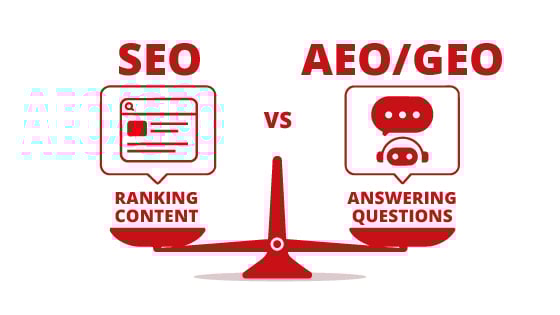
In this post, we outline five practical steps you can take to strengthen your AEO/GEO strategy and make your products easier to discover and specify.
- Treat AI as a New Discovery Tool
- Create an llms.txt File to Guide AI Models
- Make Sure Your Content Answers Real Questions
- Track AI as an Emerging Lead Source
- Centralize Your Product Content
1. Treat AI as a New Product Discovery Tool
One of the most important mindset shifts marketers need to make is recognizing AI as an emerging product discovery tool. AEC professionals are already using platforms like ChatGPT, Copilot, and other AI assistants to research and evaluate products by asking questions such as:
- What building products and materials meet this performance requirement?
- Which manufacturers offer sustainable options for this application?
- What products are commonly specified for this use case?
Make sure AI systems understand who you are, what you offer, and why your products are relevant for modern design and construction needs.
Action to take: Start treating AI as a legitimate product discovery tool alongside organic search, your website, and specification platforms like CADdetails. From there, focus on making your product information easy for AI systems to interpret and surface by creating an llms.txt file and centralizing your product data (we’ll cover both steps below).
2. Create an llms.txt File to Guide AI Models
Just like robots.txt and sitemap.xml files help search engines crawl and interpret your website, a llms.txt file helps Large Language Models (LLMs) understand how to reference your content.
Although standards are still evolving, an llms.txt file can guide AI systems to your official, authoritative product information rather than relying on third-party sources. It also helps reduce the likelihood of outdated, incomplete, or inaccurate information being surfaced in AI-generated responses. 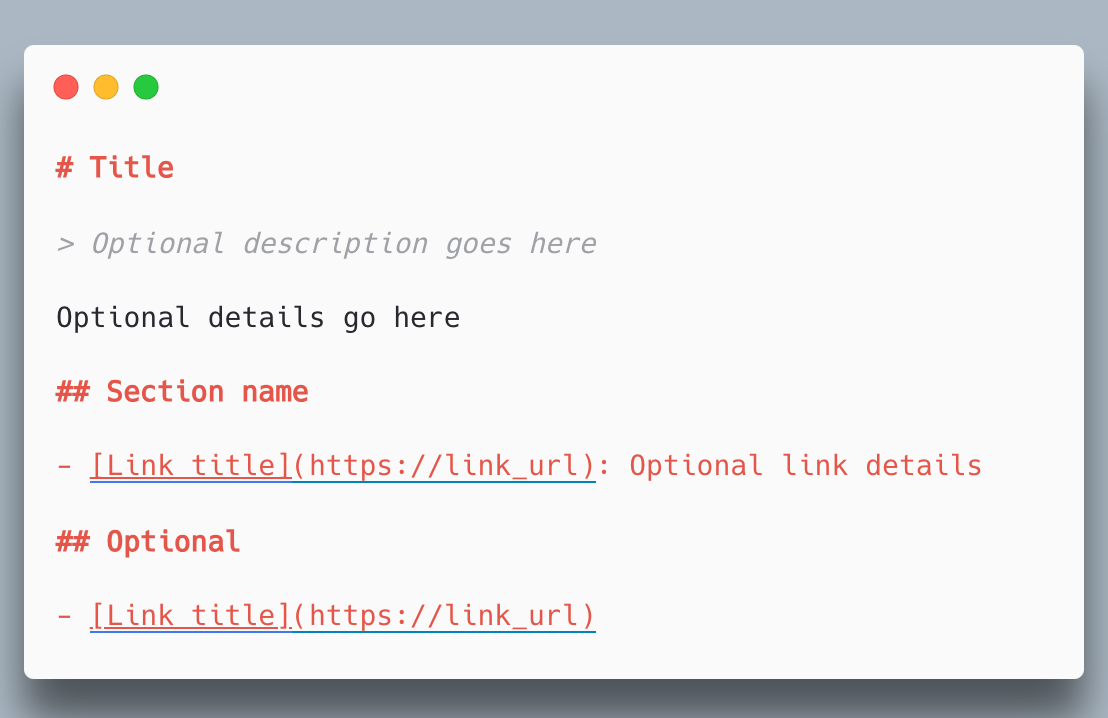 Source: llmstxt.org
Here’s how to create an llms.txt file in 4 steps:
1. Identify your authoritative content: Compile links to your most accurate and up-to-date resources, including:
- Product pages
- Specs and technical documentation
- BIM/CAD/3D libraries
- Certifications and sustainability materials
- Compliance, warranty, and installation information
2. Create a simple plain-text file formatted in Markdown: Organize your content in a clean, easy-to-scan structure with direct links to relevant pages. This file should prioritize clarity, structure, and accuracy over brand voice or marketing language.
Here are some common Markdown elements you’ll want to use in your llms.txt file:
- # for an H1 heading, ## for H2s, ### for H3s, and so on
- > for blockquotes to call out important notes or descriptions
- - or * for bullet points in unordered lists
- [text](url) to create hyperlinks to your content
- : to add short descriptions next to links and clarify what they reference
Here’s a helpful example to reference while you’re creating your own llms.txt.
3. Host your file at the root of your domain: Place the file at the top level of your website so it is easily discoverable by crawlers and automated systems. It should follow this format: https://www.yoursite.com/llms.txt
Also, make sure the file is publicly accessible (no login required and no forms to fill out). If AI systems can’t access it freely, they won’t use it.
4. Update regularly: Review the file on a quarterly basis to confirm that links remain accurate and aligned with your latest product content.
3. Make Sure Your Content Answers Real Questions
AI systems prioritize content that directly addresses practical, real-world questions. This requires creating structured, well-organized product content designed not only for human readers, but also for machine interpretation.
For building product marketers, this is an opportunity to strengthen content strategy. Large Language Models (LLMs) tend to favor content that is clear, structured, and presented in a Q&A or FAQ format because it closely aligns with how users search for information. In addition to improving AI visibility, well-optimized question-based content has been shown to increase organic traffic by as much as 20%.
Action to take: Review your existing product pages and resources to identify gaps where important questions remain unanswered. Address those gaps by incorporating structured, question-based content. Consider adding FAQ sections to product pages and case studies, and developing Q&A-style blog posts that cover common performance requirements, code compliance considerations, and installation guidance.
4. Track AI as an Emerging Lead Source
As AI-driven discovery continues to grow, you may see changes in how prospects engage with your brand. Leads may initiate contact with a strong understanding of your products or bypass the early education stage altogether, resulting in shorter sales cycles and more informed sales conversations.
This often indicates that AI tools are influencing buyer research before AEC prospects visit your website or complete a form—effectively operating upstream of your traditional marketing funnel.
Action to take: Begin measuring AI’s influence by updating lead forms, sales discovery conversations, and reporting processes to include questions such as:
- How did you hear about us?
- What research did you conduct before reaching out?
- Did you use any AI tools during your search?
You may find that AI is playing a more significant role in the specifier's journey than you knew.
Want to learn more about the AEC marketing funnel and specifier’s journey? Download Part 1 of our Digital Marketing Handbook for Building Product Manufacturers here.
Prefer to watch instead? Check out the on-demand webinar here.
5. Centralize Your Product Content
AI models prioritize clarity and consistency. When product content is dispersed across personal folders, shared drives, and disconnected systems, your brand becomes more difficult to interpret and easier to overlook. If your internal data is fragmented, AI systems may reflect that same inconsistency in the information they surface to AEC professionals, if your products are surfaced at all.
Action to take: Consider adopting a unified DAM (Digital Asset Management) and PIM (Product Information Management) platform like Prodify to strengthen your product data infrastructure. An effective AEO/GEO strategy begins with centralized, structured content in a single system, ensuring accurate, authoritative product information is ready to be surfaced wherever design professionals are searching.
Getting Specified in the Age of AI
AI is changing how AEC professionals search for products—reducing click-throughs, accelerating research, and reshaping how product decisions are made. As a result, gaining visibility earlier in the specifier journey has become a major competitive advantage.
CADdetails helps you strengthen early-stage visibility by positioning your brand directly in front of AEC professionals who are actively researching and specifying products. Plus, listing your products on CADdetails.com gives AI systems another authoritative online source to draw trustworthy information from, increasing the likelihood that your products will be surfaced in AI-generated responses.
If you’re looking to strengthen your AEO/GEO strategy and improve your discoverability in the age of AI, we’re here to help.
Learn more about how CADdetails here, or book a demo to get started.
Cover image by Jonathan Mueller on Unsplash